- JEPAA Member
- Rō-zashi embroidery
- Yoshiko Nishimura
- 絽ざし
- 西村良子(寛子)
© 2026 Yoshiko Nishimura.
SCROLL
MEDITERRANEAN CONFERENCE CENTER
July 3–5, 2026
Yoshiko Nishimura
西村良子(寛子)
Yoshiko Nishimura is a Japanese rozashi artist and a member of the Japan-Europe Palace Art Association.
Her works have been exhibited not only in Japan, but also in countries around the world. While preserving the delicate techniques of rozashi, a traditional Japanese textile art, she continues to create works that weave serene beauty and refined elegance into the present day.
About Rozashi Embroidery
Rozashi is a uniquely Japanese form of needlework and a type of counted-thread embroidery, similar to canvaswork. Using the open weave of a fabric called kioro (raw gauze silk), thick twisted silk threads are stitched row by row to gradually fill the entire surface of the cloth.
Although it is a form of embroidery capable of depicting everything from geometric patterns to flowers and birds, rozashiis distinguished by its highly structured technique. The threads are stitched only in straight lines along the weave of the fabric, completely covering the surface to create luminous, glossy imagery. Because diagonal stitching is not used, producing curved designs requires exceptional time and precision. More than 200 stitching techniques are said to exist within the tradition.
The finished fabric is remarkably durable and has long been used for items such as purses, bags, and obi sashes.
Rozashi is one of Japan’s traditional crafts, with a history dating back to the Nara period (710–794). Some of the earliest surviving examples were created as decorative coverings for Buddhist statues during the construction of Tōdai-ji Temple. The craft continued to be passed down through the Heian and Edo periods, gaining popularity among court nobles and within the women’s quarters of the shogunate. Historical records suggest that it was appreciated not only by women, but by men as well.
In the NHK historical drama Gō: Princesses’ Sengoku, there is a scene in which the warlord Shibata Katsuie teaches rozashi embroidery to the three Asai sisters, illustrating how the craft was once practiced by men and even used to create durable protective pouches carried into battle.
Through the Meiji, Taishō, and Shōwa eras, rozashi continued to survive primarily among upper-class women. However, after World War II, the tradition gradually declined, and today relatively few people are familiar with it. Because rozashideveloped as a cultural pastime rather than within a specific production region, preserving and passing down the craft has proven especially difficult.
Today, only a small number of rozashi instructors across Japan continue to promote and preserve this art form, hoping that more people will discover it, appreciate it, and carry the tradition into the future.
絽刺しは日本独特の手芸で区限刺繍(キャンバスワーク)の一種。
生絽(きろ)の折り目の隙間を利用して、1段ずつまたは数段ずつ絽刺し糸(太い絹の強撚糸)で刺し、布全体を埋めていく。
直線模様、幾何学模様から花鳥などの模様まである刺繍の一種ではあるが、絽の生地目に沿って直線で糸を刺していき、布面をすべて埋め尽くすことで光沢のある絵柄を浮かび上がらせるという特徴がある。
斜めに糸を刺すことがないため曲線的なデザインを刺すためには手間暇がかかり、その刺し方は200種に及ぶ。刺しあがった布は丈夫であり、財布、バッグなどの袋物や帯などに用いられる。
絽刺しは奈良時代から伝わる日本伝統工芸の一つであり、奈良東大寺建立の際に仏像用敷物として作られたものが今も残っている。
その後も平安時代から江戸時代まで、それぞれの時代を通して受け継がれ、公家や大奥で人気を集め、女性のみならず男性にも親しまれたようである。
NHK大河ドラマ「江姫たちの戦国」の中で、柴田勝家がお江たち三姉妹に絽刺しの手ほどきをする場面が放映された。
男性も嗜み、丈夫な仕上がりの絽刺しゆえに戦場へ持っていく守り袋等として活用されていた様子が窺い知れる。
明治・大正・昭和へと時代が移り行く間、主に上流婦人の間で受け継がれていったが、第二次世界大戦後には廃れてゆき今日ではその存在を知る人も少なくなった。
趣味として広がりを見せた絽刺しは特定の産地を持たないためその保存や伝承が難しことが衰退の原因ともいえる。
現在数名の絽刺し指導者が全国でその普及活動を推進しており、趣味の領域で多くの方々に知っていただき受け継いでいっていただくことを願っている。
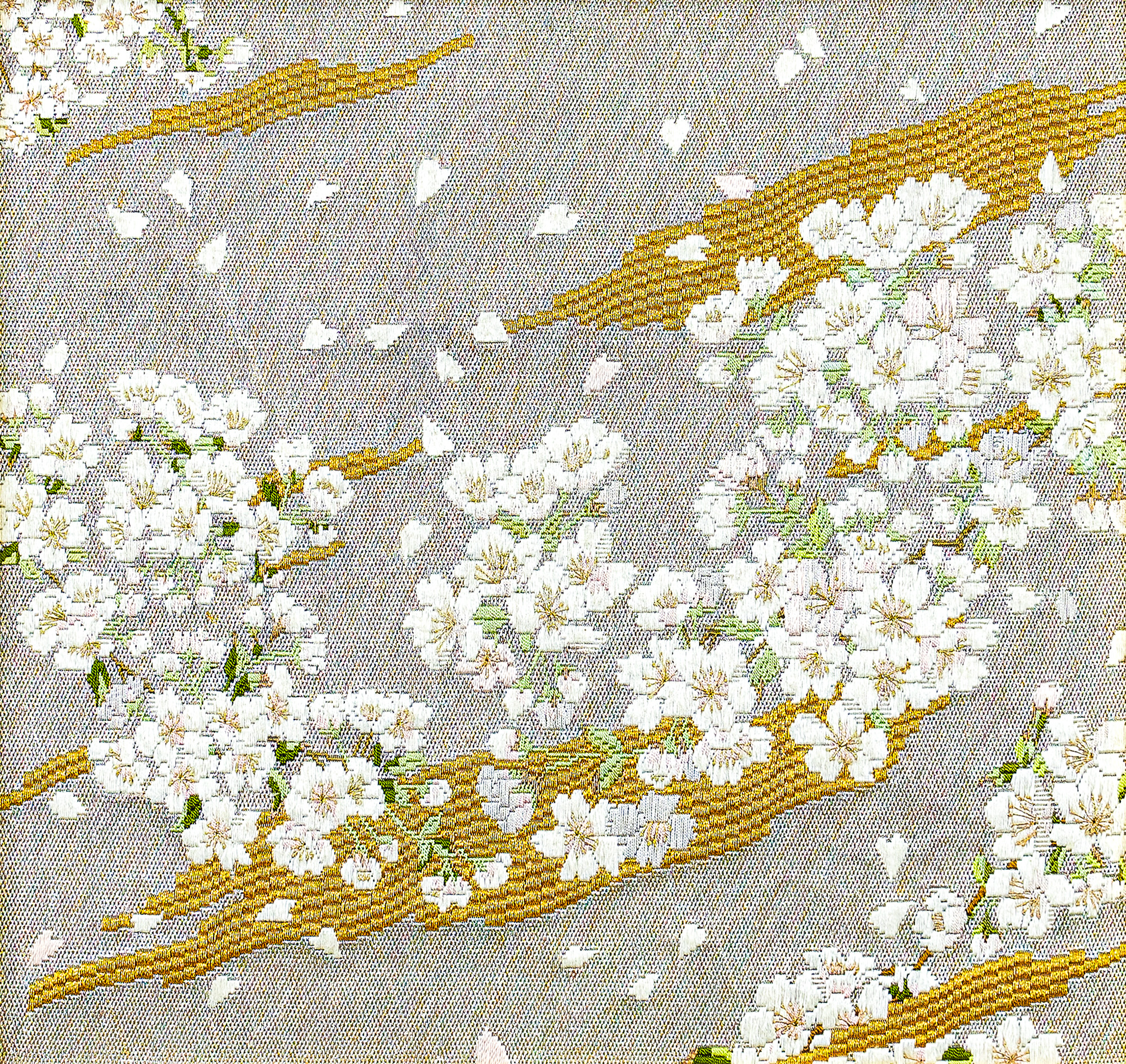
Raft of Petals
花筏
Artist’s Statement
For Japanese people, cherry blossoms are often seen as symbols of beauty, peace, and friendship.
Throughout my work, I have explored the theme of sakura from many different perspectives.
In this piece, I sought to capture the quiet beauty of a hanaikada—a “raft of petals” formed when fallen cherry blossoms gather and drift upon the surface of the water.
The scattered petals floating across the water are expressed softly through silver-colored silk threads and loosely twisted silk yarn, while the shimmering reflections on the water are rendered with gold thread.
I would be delighted if viewers could appreciate both the delicate texture of the petals carried by the breeze and the serene atmosphere created by the blossoms gently drifting across the water.
桜は日本人にとっては美と平和、友好のシンボルと捉えられます。その桜をさまざまな視点から作品にしてまいりましたが、この作品はちってもなお美しい水面の桜を表現したと考えて制作いたしました。
水面に散り敷く桜を銀のカラーの絹糸と甘寄りの絹糸で柔らかく表現し、水面の煌めきを金糸で表現してみました。 風に舞う花びらと水面の花びら風合いを楽しんでいただければと思います。
Japan-Europe Palace Art Association Commentary
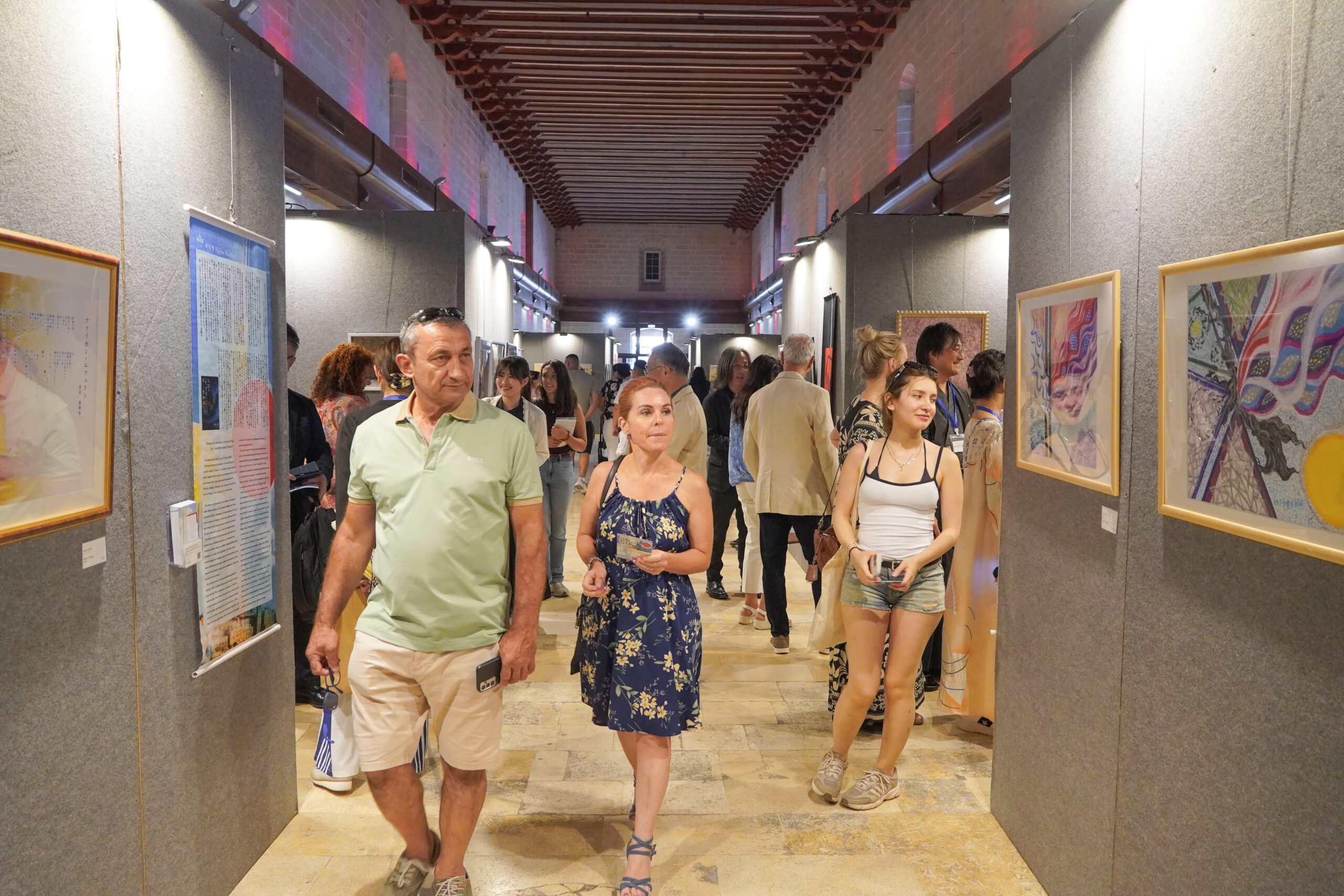
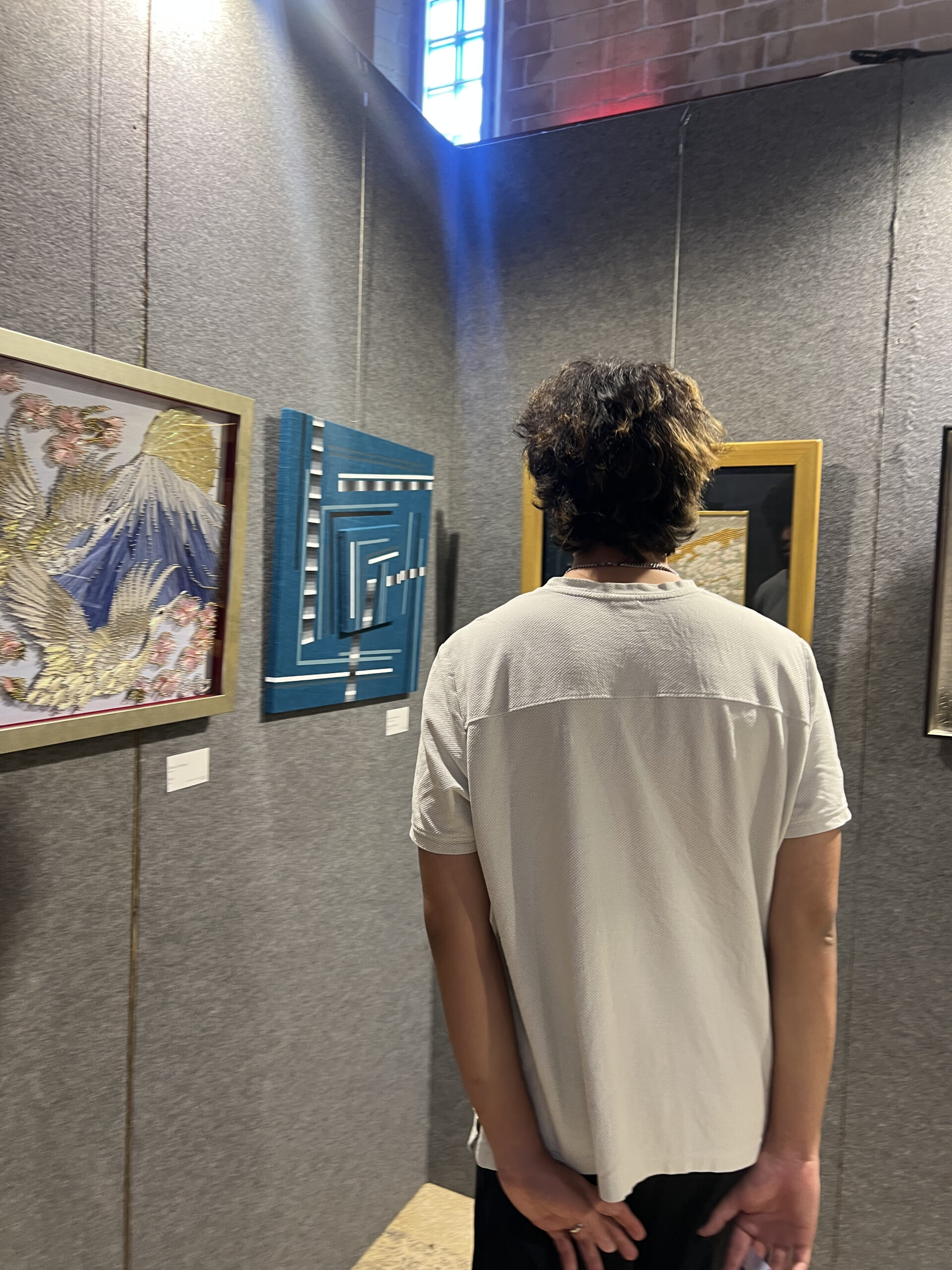
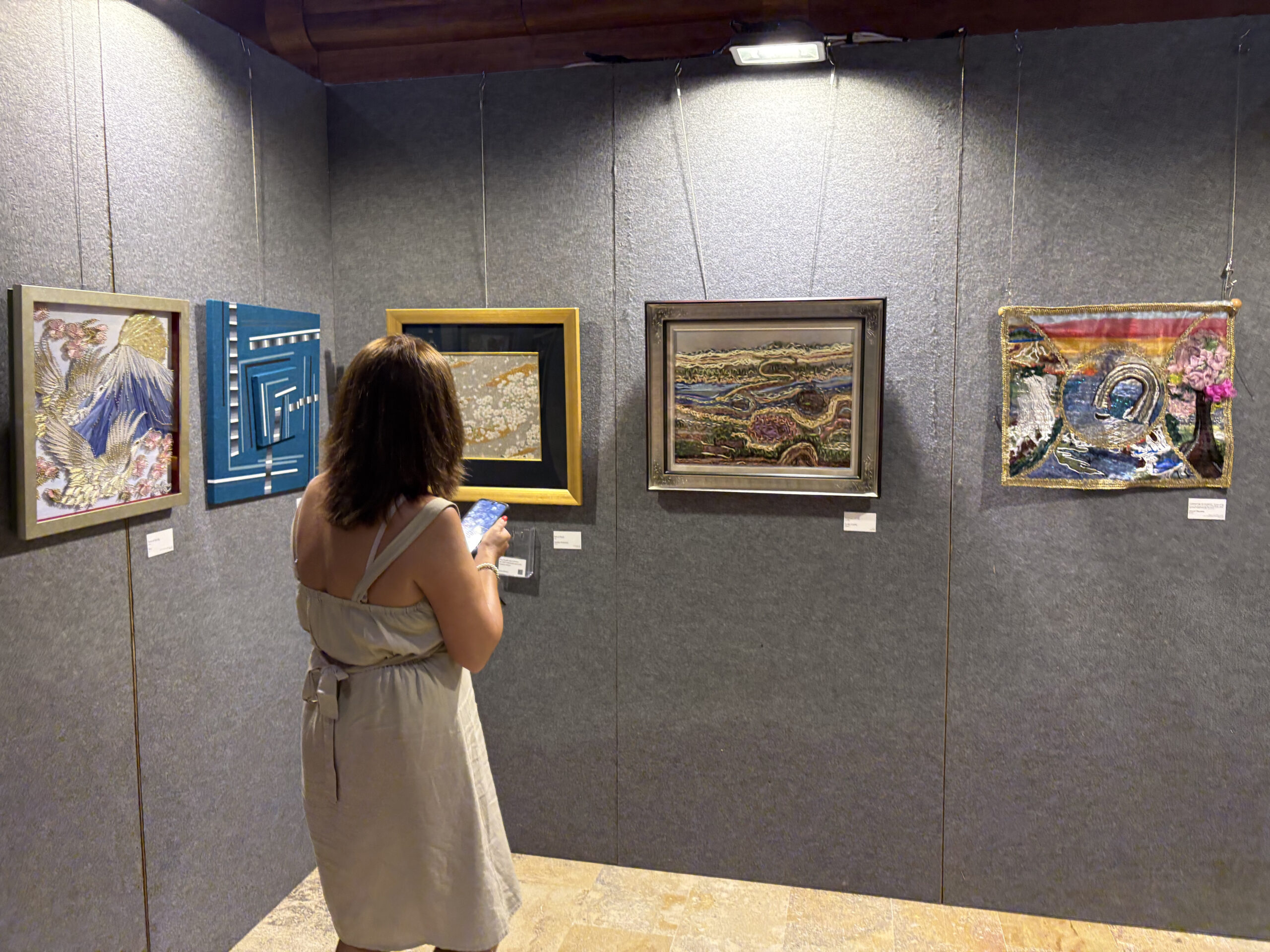
Post-Exhibition Report
展覧会開催報告

Exhibition Report URL
展覧会報告URL