- JEPAA Member
- Calligraphy
- Keisui Morikawa
- 書道
- 森川畦水
© 2026 Keisui Morikawa.
SCROLL
MEDITERRANEAN CONFERENCE CENTER
July 3–5, 2026
Keisui Morikawa
森川畦水
Keisui Morikawa is a Japanese calligrapher and a member of the Japan-Europe Palace Art Association.
Her works have been exhibited not only throughout Japan but also in countries around the world.
森川畦水は日本の書家。日欧宮殿芸術協会の会員。
日本のみならず世界各国に作品を出展。
“pet chickens, hearing my footsteps they cluck at me on a summer eve” (line of Japanese waka verse by Morikawa Moritoshi)
E森川司俊詠 和歌一首 “飼ひ鶏は 我が靴音を聞きわけて くくつと鳴けり 夏の夕暮れ”
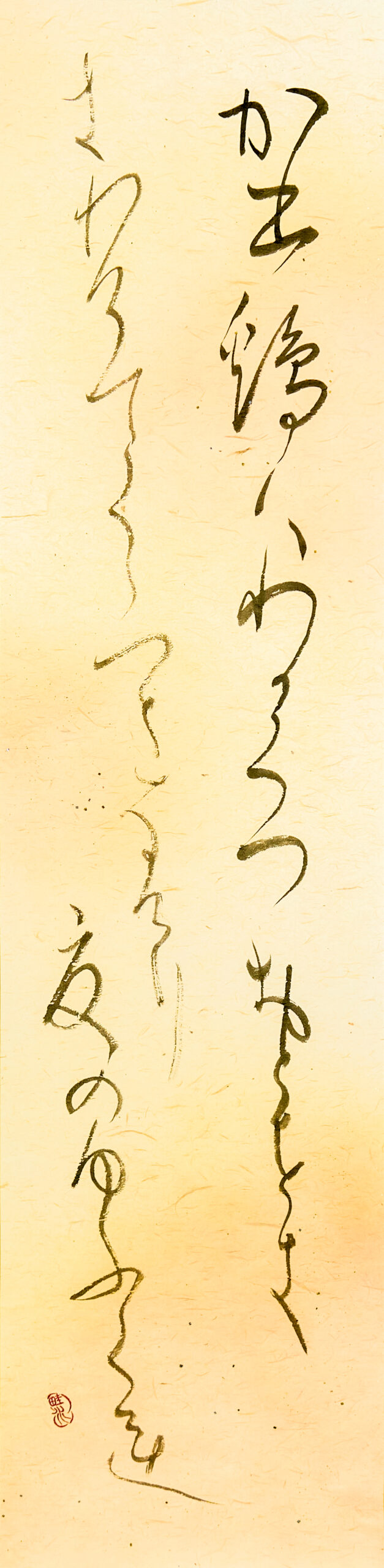
Artist’s Statement
Until three years ago, I kept chickens at my home.
It all began after I was injured in a traffic accident. Seeing how painfully I was walking, a concerned friend carefully brought me three Silkie eggs wrapped in paper.
Another friend later gave me bantams, and after incubating the eggs, two hens and one rooster were born. They grew healthy and lively, and I cared for them for more than ten years.
One summer evening, after returning home tired from the day, one of my chickens recognized the sound of my footsteps and gave a soft “kukku” call. It was a small yet heartwarming moment at dusk.
The summer evening in this poem recalls, in contrast, the famous autumn evening poem by the monk Jakuren.
Today, neither my husband nor the chickens are with me anymore.
My sense of loneliness does not approach the depth expressed in Jakuren’s poem:
“Sadness does not lie in color alone—
an autumn evening
on a mountain of Japanese yew trees.”
Yet even now, more than a thousand years later, those words continue to move my heart deeply.
私の家では、三年前まで鶏を飼っていました。
きっかけは、私が交通事故に遭い、つらそうに歩いている姿を見かけた友人が、心配してウコッケイの卵を三個、大切に紙に包んで持ってきてくれたのです。
また、別の友人からチャボをいただき、卵を温めたところ、メス2羽とオス1羽が生まれ、元気に育ち、増えて十年も飼っていたのです。
疲れて帰宅すると、私の足音を聞き分けた私のニワトリが「くくっー」と鳴いたのです。それは夏の夕暮れのことでした。微笑ましい夏の夕暮れです。
寂蓮法師の秋の夕暮れは寂しさの極まりにいます。今は、主人も鶏もいません。
千年前に詠まれた寂蓮の「寂しさはその色としもなかりけり 槙立つ山の秋の夕暮れ」の寂しさには及びません。
が、今なお心を打たれる歌なのです。
About the Waka Poet
Moritoshi Morikawa
(December 2, 1933 – June 23, 2022)
Moritoshi Morikawa graduated from the Department of Japanese Literature at Waseda University and studied under the tanka poet Juzo Kagoshima.
He worked as a Japanese language teacher at public high schools in Saitama Prefecture.
While teaching at Konosu High School, he served as the homeroom teacher of Keisui Morikawa and guided her tanka compositions through careful instruction and critique.
Writing under the pen name Shizuo Mori, he authored the novel Onnagata Densetsu(The Legend of the Onnagata),
which received the Runner-up Prize of the Saitama Literary Award and was later serialized in the Saitama Shimbun newspaper.
森川司俊(もりかわ もりとし)
1933年12月2日〜2022年6月23日
早稲田大学文学部国文学科を卒業。歌人・鹿児島寿藏に師事。
埼玉県立高等学校で国語教師を務め、鴻巣高等学校勤務の際には、生徒であった森川畦水の担任として、その短歌作品を添削・指導した。
ペンネーム「森静雄」で執筆した小説『女形伝説』は埼玉文学賞準賞を受賞し、同作は埼玉新聞に連載された。
Japan-Europe Palace Art Association Commentary
A subtle current flows through the calligraphy of Keisui Morikawa—a delicate resonance in which words and brushwork seem to breathe together.
This quality is especially evident in works based on the waka poetry of her late husband, Moritoshi Morikawa.
Rather than imposing her own intentions upon the text, she aligns her brush with the natural rhythm and breath of the words themselves.
Within her refined and supple brushwork resides a quiet yet unwavering strength.
Her compositions, rooted in the traditional aesthetics of Japanese calligraphy, achieve a remarkable harmony between flowing lines and carefully considered spaces.
The result possesses a softness that seems to appeal not only to the eye but almost to the sense of touch.
The subtle fluctuations of line and the lingering resonance of the composition do more than guide the viewer’s gaze—they convey the warmth of language within silence itself.
Beyond the beauty of the characters, Morikawa’s work demonstrates how the act of calligraphy can transcend words and touch the deepest layers of human emotion.
Each brushstroke stands as a quiet testament to that enduring power.
森川畦水の書には、ことばと筆とが交感する繊細な気の流れが宿っている。
とりわけ、夫・森川司俊の和歌を題材にした作品において顕著なのは、書き手の意図を前に押し出すのではなく、言葉の呼吸に自らの筆を同調させていくという姿勢である。
その細やかでしなやかな運筆には、抑制の中に凛とした意志が通っている。
伝統的な書の美意識が息づく書面には、連綿と続く線と間の織りが見事に調和し、視覚ではなく触覚に訴えるような柔らかさが漂う。
線の揺らぎや余韻に満ちた構成は、視線を導くだけでなく、沈黙の中にことばの温度を伝える。
文字の美しさにとどまらず、書という行為がいかに言葉を超え、人の心の襞に触れることができるか。それを、彼女の一筆一筆が静かに証明している。
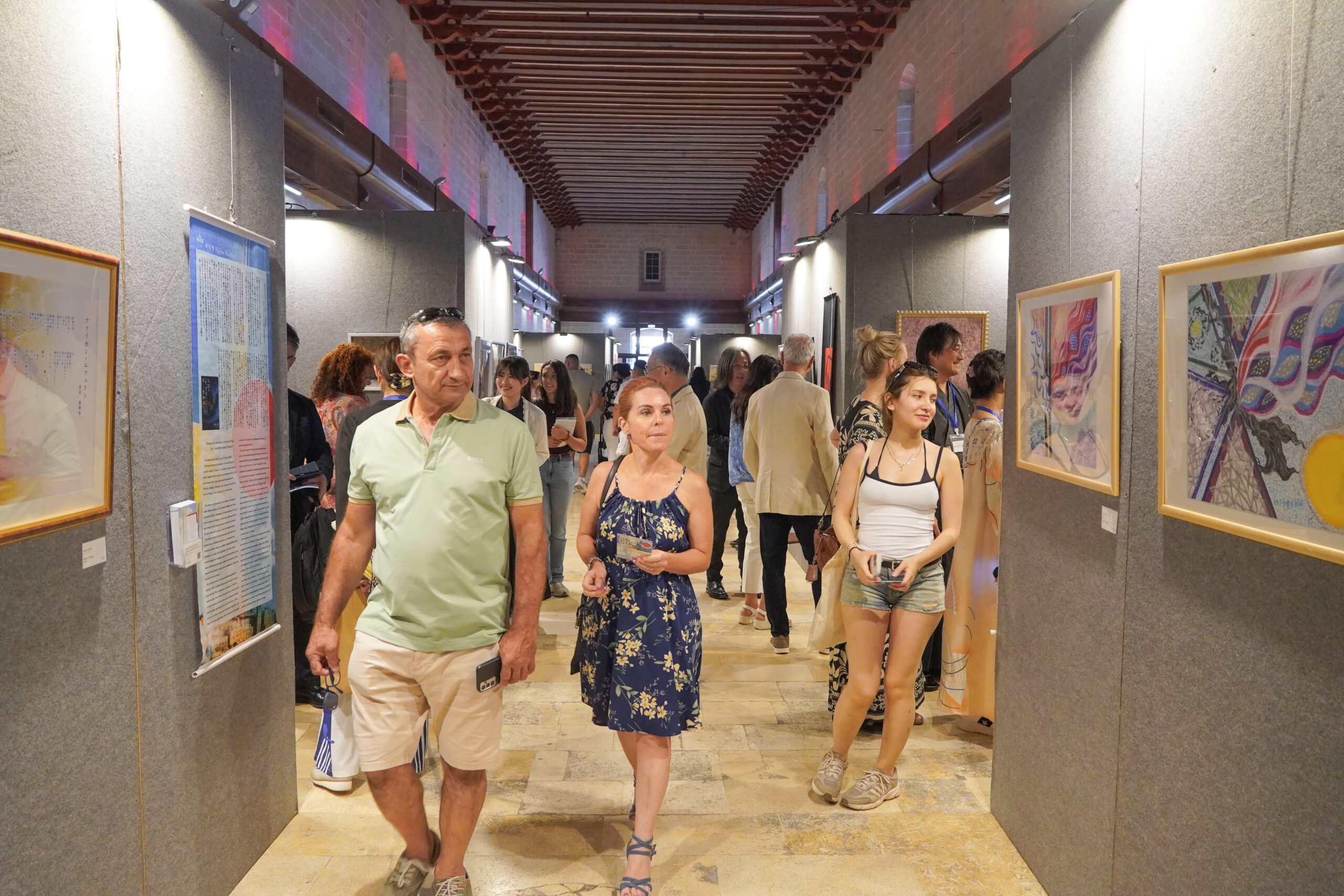
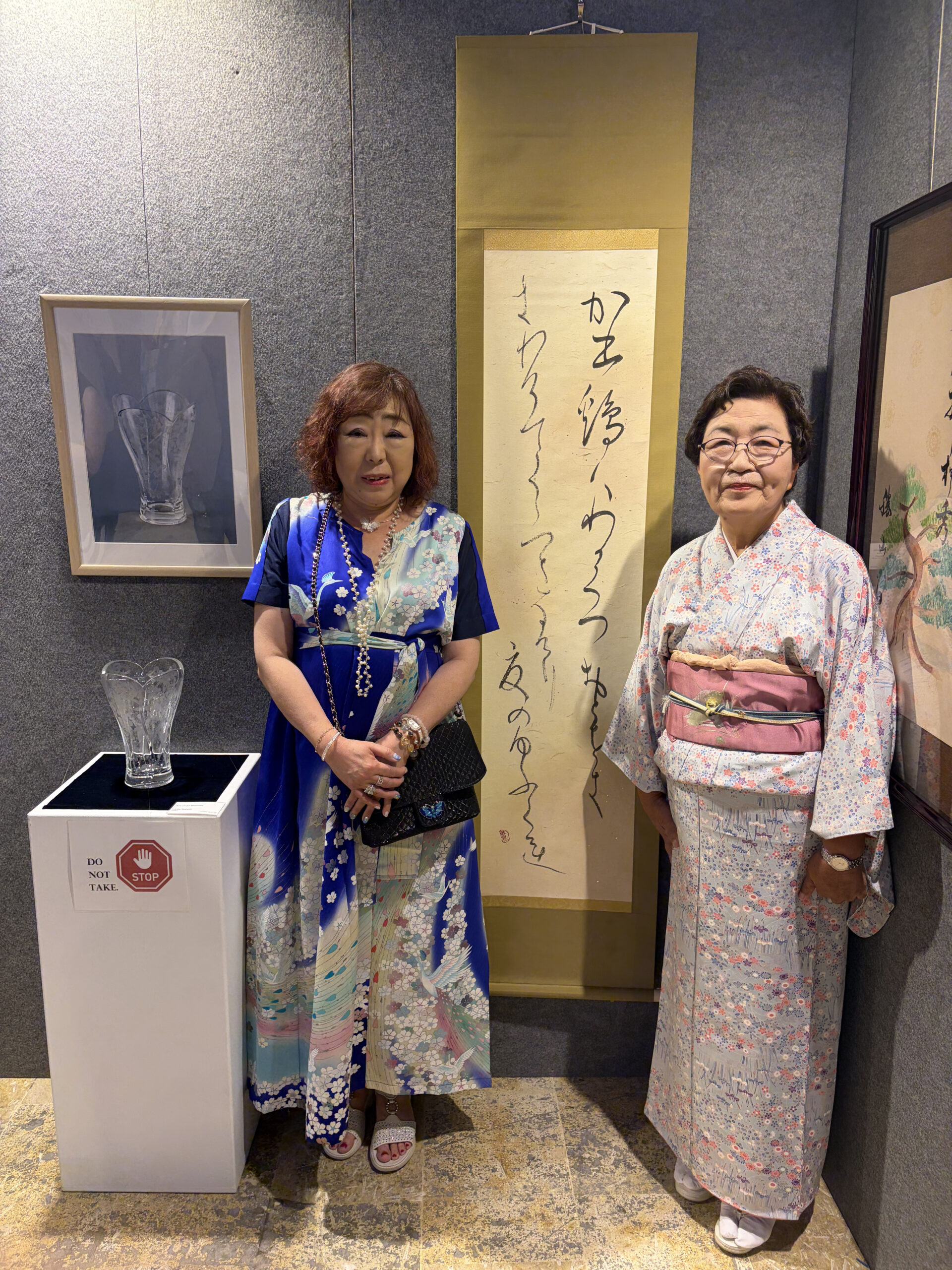
Post-Exhibition Report
展覧会開催報告

Exhibition Report URL
展覧会報告URL