- JEPAA Member
- A new form of calligraphy – a fusion of writing, poetry, and painting
- Kanato Kichibei
- 今までにない書(書・詩・絵の融合)
- 吉米可菜人
© 2026 Kanato Kichibei.
SCROLL
MEDITERRANEAN CONFERENCE CENTER
July 3–5, 2026
Kanato Kichibei
吉米可菜人
Kanato Kichibei is a Japanese writer. Living a self-sufficient lifestyle led him to question the direction of contemporary society.
Motivated by a conviction that change was necessary, he wrote the poem Let Us Build a Village.
Seeking to bring the vision expressed in the poem into reality, he launched the “Tane-Tsumugi Mura” initiative, which has since continued to grow and attract wider participation.
吉米可菜人は日本の作家。
自給自足の暮らしを送る中で、現代社会の在り方に疑問を抱くようになり、「このままではいけない」という思いから、自作の詩『村を作ろう』が生まれました。
その詩の世界を実際に形にしようと、「種紡ぎ・ムラ」の活動を始め、その取り組みは広がりを見せている。
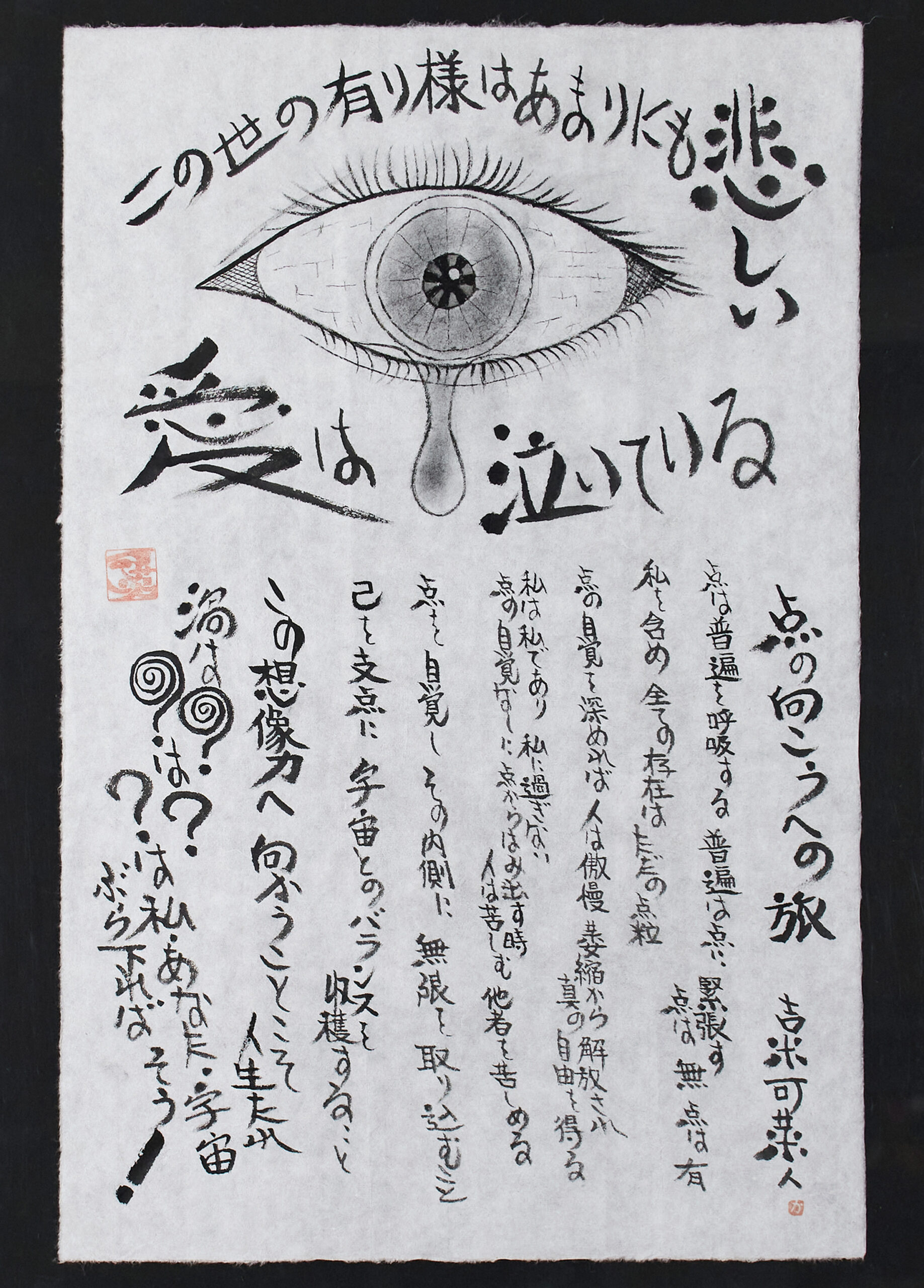
点の向こうへの旅
Journey Beyond the Point
Artist’s Statement
The problems of this world cannot be resolved through the values of this world alone.
They can only begin to be resolved when we encounter the values of “the Other Shore”— truth, love, and the spiritual power of words (kotodama).
The Point is the place where such an encounter occurs. As our awareness of the Point deepens, things naturally begin to find their resolution.
The act of looking into the inner realm of the Point is what I call “Changing the World with a Chon.”
The word Chonrefers to a simple dot or mark, yet it also symbolizes a gateway to a deeper reality.
I know practical ways to engage in this process. Anyone can do it, anytime and anywhere.
If you would like to learn more, please feel free to contact me.
Let us change the world together—with a Chon‼️.
この世のことはこの世的価値観では解決しません。彼の地(真理・愛・言霊)の価値観に出会って 始めて解決されるのです。その遭遇の場こそ点なのです。
点への意識が深まれば 必然的にものごとは解決して行きます。点の内側を覗き込む作業こそ私の唱える(チョンで世界は変わる)なのです。具体的な取り組み方は私が知っています。
誰でも・いつでも・とこでも出来るものです。知りたい方はいつでもお問い合わせ下さい。さあ共に「チョンで世界を変えましょう‼️」
Japan-Europe Palace Art Association Commentary
Kanato Kichibei’s work transcends the conventional boundaries of calligraphy, poetry, and painting, unfolding as a singular form of expression that poses profound questions about the human spirit itself. In his art, words cease to function merely as language; they become form, form becomes thought, and thought returns once again to poetry in a continuous cycle. Underlying his creative practice are insights shaped by a self-sufficient way of life and a persistent gaze directed toward the essential nature of human existence.
In Journey Beyond the Point, the prominently depicted eye serves not only as a symbol of observation directed toward the outside world, but also as a window into inner awareness. The words that surround it are not explanatory statements but traces of contemplation, transforming the entire composition into both a poem and a philosophical landscape. The contrast between the tear-filled eye and the powerful calligraphic forms speaks simultaneously of concern for the condition of contemporary society and of a profound faith in humanity.
A defining aspect of Kichibei’s work is its emphasis on the act of questioning rather than the pursuit of definitive answers. His calligraphy exists not merely to be read, but to invite reflection, feeling, and moments of pause. Through the integration of language, imagery, philosophy, and prayer, he presents art not simply as an object of appreciation, but as an active engagement with the way one lives.
吉米可菜人の作品は、書・詩・絵という既存の領域を横断しながら、人間の精神そのものへ問いを投げかける独自の表現として展開されている。そこでは文字は単なる言語ではなく形となり、形は思想となり、思想は再び詩として循環してゆく。自給自足の暮らしの中で培われた社会への洞察と、人間の本質を見つめようとする視線が、その創作の根底を支えている。
《点の向こうへの旅》において象徴的に描かれた大きな眼差しは、外界を見つめる目であると同時に、自己の内側へ向かう意識の窓としても現れている。その周囲を巡る言葉は説明ではなく思索の軌跡であり、画面全体は一篇の詩であると同時に一つの思想空間として構成されている。涙を流す眼と力強い文字の対比は、現代社会への問題意識と、人間への深い信頼とを同時に語りかける。
また吉米可菜人の表現には、「わかること」よりも「問い続けること」を重んじる姿勢が一貫して流れている。書は読むためだけに存在するのではなく、考え、感じ、立ち止まるための場へと変貌する。言葉と図像、哲学と祈りが一体となったその世界は、芸術を鑑賞の対象としてではなく、生き方そのものへ結びつく行為として提示しているのである。
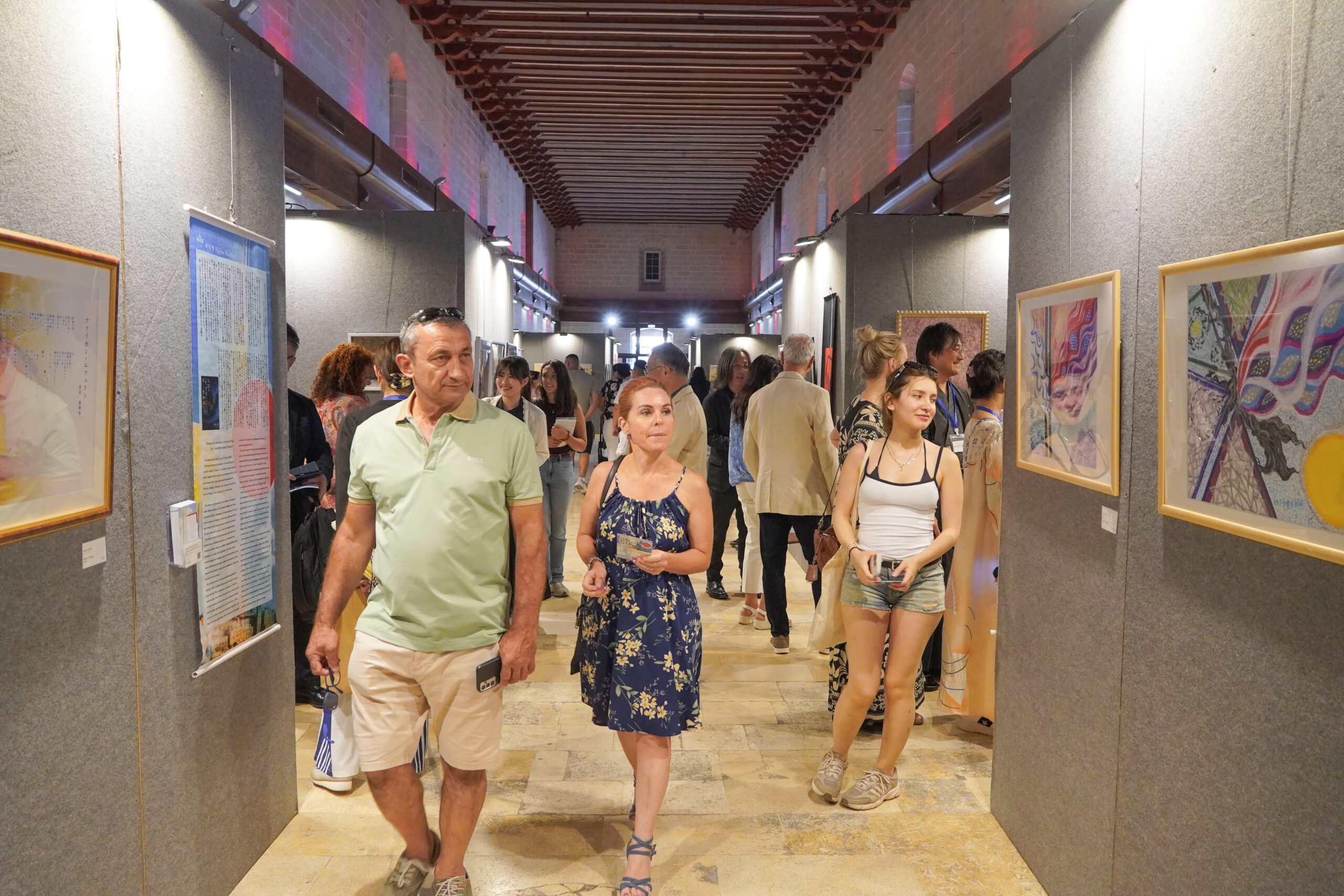
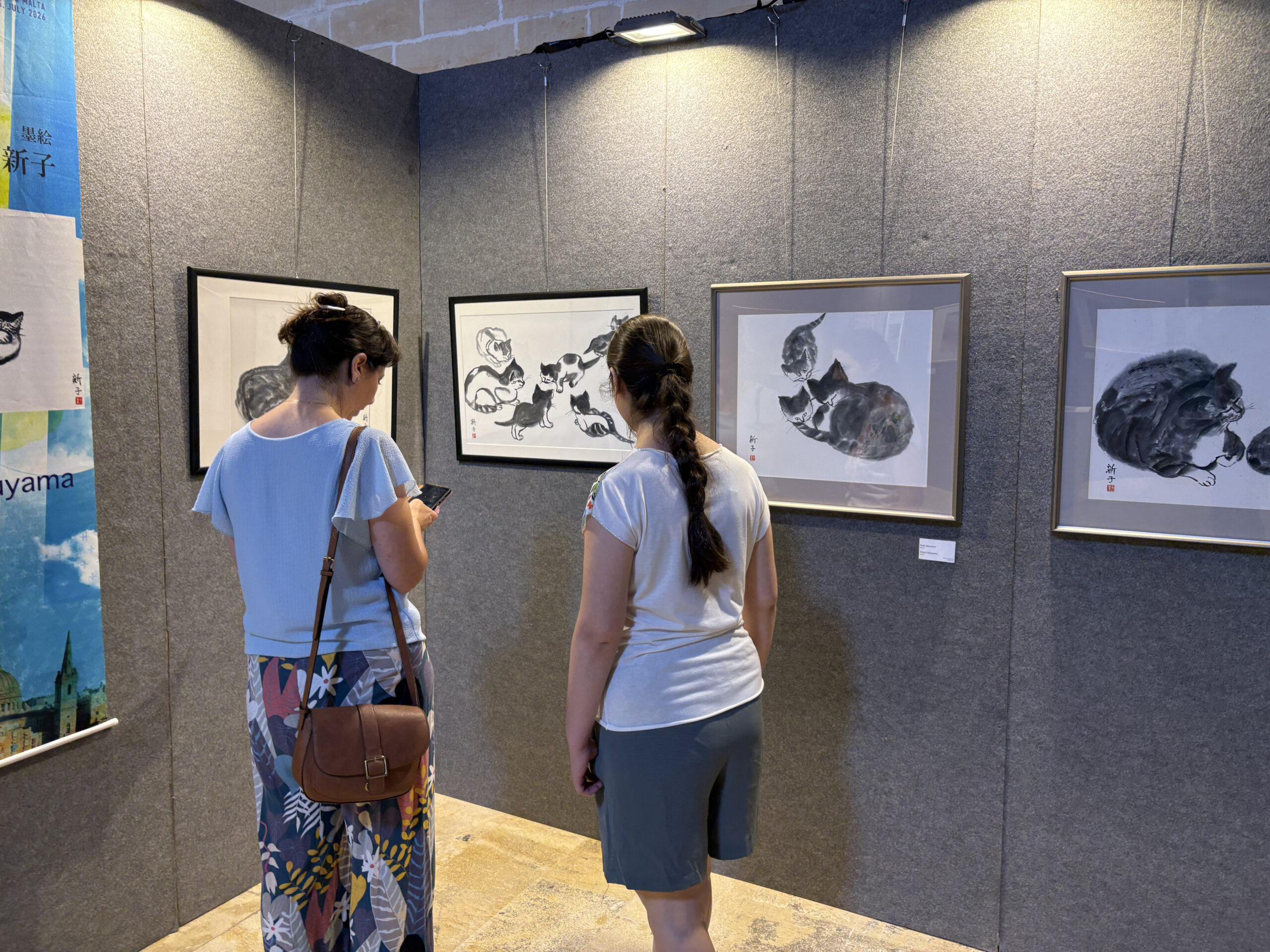
Post-Exhibition Report
展覧会開催報告

Exhibition Report URL
展覧会報告URL